


29th January 2021
Professor Julie Byles, Head of ILC-Australia presents on ‘Healthy Ageing at very old ages – perspectives of women from the Australian Longitudinal Study on Women’s Health, at the 53rd Annual Australian Association of Gerontology (AAG) Conference in 2020.
The latter period of life is often characterised in terms of increasing burden of disease and disability, decline in physical function, decreased capacity for wellbeing and quality of life, reduced social participation and increased needs for health and social care. However, over recent decades, there has been a greater emphasis on the potential for people to age “successfully” and “healthy”.
The WHO 2015 World Report on Ageing and Health framed a public health goal of Healthy Ageing as a process of “building and maintaining for as long as possible of the functional ability that enables older people to be and to do the things they have reason to value”. The aim of this project was to interview women in their mid to late 90s to gain insights into the women’s own perspectives of ageing, and to compare how these perspectives fit with the construct of healthy ageing as framed by the WHO.
The 51 women from the oldest cohort of the Australian Longitudinal Study on Women’s Health (ALSWH) born between 1921-26, participated in the interviews. The interviews were designed to encourage women to discuss their functional ability to do the things they want to do, their overall wellbeing, and the ways in which they are supported by their environments. The interviews were transcribed and de-identified prior to importing into the qualitative data analysis program N-Vivo. The data were then subjected to thematic analysis to identify major themes in relation to the research aims.
Healthy ageing hasn’t translated as a concrete idea, but is a lived reality for many of these women with most saying they were well and happy. Generally, women interpreted healthy ageing as freedom from diseases, while other women interpreted it as referring to healthy diet and exercise, keeping active, maintaining interests and having a positive outlook.
Watch Professor Byles’ presentation here.
Prepared by:
Professor Julie Byles BMed PhD FAAHMS
Director | Research Centre for Generational Health and Ageing
Global Innovation Chair in Responsive Transitions in Health and Ageing
School of Medicine and Public Health, Faculty of Health and Medicine
The University of Newcastle
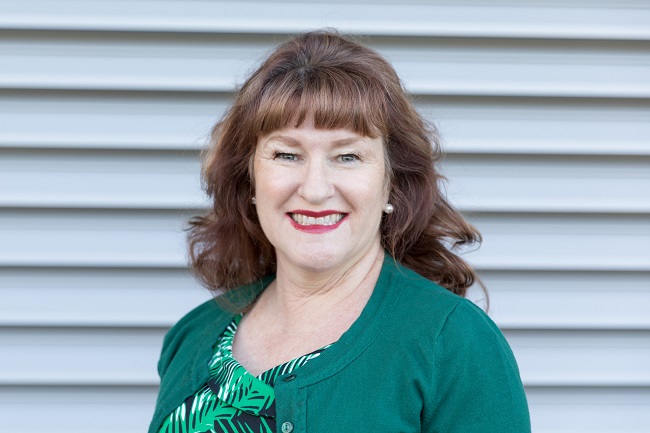
Professor Julie Byles, Global Innovation Chair in Responsive Transitions in Health and Ageing,
School of Medicine and Public Health. Photo taken at HMRI for HR Marketing materials, by Eddie O’Reilly, Tuesday, May 22, 2018.

A Shared Vision for Global Longevity of Rayne and Susana (newly elected Co-Presidents)
It is a profound honour to serve as Co-Presidents of the International Longevity Centre Global Alliance. Our partnership reflects the very spirit of the Alliance: global in reach, grounded in local realities, and united by a shared commitment to dignity, equity, and wellbeing across the life course.
27th January 2026
VNRs of HLPF at the UN: The 2030 Agenda for Sustainable Development
Voluntary national reviews (VNRs) were held at High-Level Political Forum on Sustainable Development (HLPF) from 14 to 24 July 2025, UN, New York. Each State shared Experiences and Lessons on the 2030 Agenda and SDGs implementation.
24th July 2025
The Intersectionality of Ageism & Sexism: Harnessing The Power of Older Women
During the 2025 UN High Level Political Forum, the ILC Global Alliance and partners hosted a side event to address the intersection of ageism and sexism, advocating for a UN convention to protect the rights of older persons.
16 July 2025
