


12 April 2026
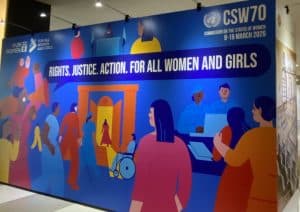
Miharu Takeuchi, a student volunteer of the International Longevity Centre Global Alliance, participated in the “Healthy, Dignified, and Prosperous: Older women thriving through better laws, policies and practices (CSW70 side event: March 16, 2026).”
This report summarises the key discussions from the event organised by UNFPA, the World Bank Group, and AARP, and identifies key opportunities to advance dignity, health, and prosperity for older women worldwide. According to the organisers, for the first time in the history of the Commission on the Status of Women, a session was specifically dedicated to the gender equality of older women, focusing on the intersection of ageing, legal protection, and economic empowerment.
- The Demographic Reality and the “Invisible” Population
The world is witnessing a dramatic surge in the population of older women. In low- and middle-income countries, the number of women aged 60 and over is projected to grow from 400 million today to 900 million by 2050. Despite their growing numbers, older women often remain invisible in policy discussions and national statistics. Many global surveys, including the Demographic and Health Surveys (DHS), stop collecting data on women after age 49, effectively erasing the experiences of older women regarding health, domestic violence, and economic status. This data gap hides a “hidden epidemic” of abuse, neglect, and poverty.
- Cumulative Inequality: A Life-Course Approach
A central theme of the session was that inequality in old age is not inevitable; it is the result of cumulative structural barriers encountered throughout a woman’s life. Speakers emphasised that “inequality at age 70 begins with a lack of choices at age 17”. Key drivers include:
- The Gender Wage Gap: Lower lifetime earnings result in fewer savings and lower pensions.
- Unpaid Care Work: Women often interrupt their careers to care for children or elderly relatives. In countries like Colombia, women over 60 work an average of 55 hours per week when unpaid labour is included.
- Legal Barriers: Limited access to land and property inheritance often leaves widows vulnerable to “property grabbing” and homelessness.
- Shifting the Narrative: From “Cost” to “Contributor”
The event called for a fundamental shift in how society views older women – moving away from seeing them as a “social cost” or “passive recipients of aid” and instead recognising them as active contributors, leaders, and wisdom keepers. For example, during the HIV crisis in Southern Africa, older women were the ones who stepped up to care for orphans. In Indonesia, older women farmers, when organised, have become vital leaders in climate resilience and community management.
- Three Pillars for Action: Prosperity, Health, and Dignity
The World Bank and other partners proposed a framework based on three essential pillars to support thriving in old age:
- Prosperous Ageing: Investing in skills and health so those who wish to work can remain productive, while ensuring gender-sensitive pension reforms. Oman was cited as a leader for its 2024 reform that recognises childcare periods in pension calculations.
- Healthy Ageing: Expanding healthcare to include older women’s specific needs, such as menopause care and screenings for reproductive cancers.
- Dignified Living: Creating barrier-free environments and providing diverse long-term care options that allow women to live independently.
- Regional Successes and Policy Examples
- Zimbabwe: Hon. Monica Mutsvangwa highlighted how the country’s Constitution and “Vision 2030” prioritise older women’s rights. Legal reforms have increased women’s land ownership and protected them from domestic violence and property grabbing.
- Asia: HelpAge International is working with the Asian Development Bank in Vietnam, Indonesia, and Mongolia to design gender-sensitive long-term care systems.
- Philanthropy: Co-Impact is driving “system change” by investing $1 billion over 10 years to dismantle structural inequalities.
Conclusion of the Session
To ensure that “no one is left behind,” the session concluded that governments must adopt a life-course approach that begins with investing in girls and young women today. Furthermore, there was strong support for a legally binding international instrument (a UN treaty) to explicitly recognise and protect the rights of older persons globally. By transforming laws and policies, society can ensure that longevity is accompanied by dignity, safety, and economic independence.
Comment of the Student volunteer
Personally, I found the observation that data on older women is often “coarse” and insufficient particularly striking, as it creates significant hurdles for evidence-based policy. Without granular data, the specific challenges of abuse, neglect, and economic exclusion remain hidden in a “blind spot”. I was also deeply moved by the metaphor that older women are those who have “held the sky” for their families and communities. They have been the backbone of social cohesion and resilience for generations.
While the term “productive” can be controversial – as it may suggest that human value is measured solely by economic output – I believe that emphasising the “productivity” of older women is a necessary narrative transition at this stage. In a global landscape where quantitative value is predominantly assigned to paid labour, highlighting the productivity of older women serves to challenge the mainstream view that they are merely “passive recipients” or “social costs”. By recognising their immense contributions, we can begin to shift the discourse toward a more inclusive definition of value. To ensure that no one is left in the “blind spots” of history, we must confront these challenges through a structural approach that integrates gender and ageing into every level of law and policy.
Author: Ms. Miharu Takeuchi
This report reflects the authors personal observations and interpretations of the session. It is intended for informational purposes only and does not constitute an official record of the event. While every effort has been made to ensure accuracy, the content has not been independently verified, and the organising institutions assume no responsibility for any errors or omissions. Any views expressed do not necessarily reflect those of the International Longevity Centre Global Alliance, Ltd.

An Erasmus+ project led by Elpida, Fundacja Różne Wątki and Leyden Academy on Vitality & Ageing explores gender differences in adult education participation among people aged 60 and older in the Czech Republic, Poland and the Netherlands.
9th June 2026
A Casebook of Clinical Dilemmas from Around the World – A Graphic novel on medical ethics
Graphic Medical Ethics: A Casebook of Clinical Dilemmas from Around the World presents real-life medical ethics cases from eight countries in graphic (comic) form, offering accessible, multicultural perspectives on complex healthcare dilemmas for both professionals and general readers.
18th May 2026
Getting Older Adults Moving at the Right Time
Research by Gali Albalak explored how the timing of physical activity affects sleep, mood and health in adults aged 60 to 80 years with sleep difficulties. The study found that morning exercise was associated with earlier bedtimes, improved mood and higher energy levels.
6th May 2026
