


24th April 2026
Respiratory infections are eroding the health of Europe’s ageing population and creating an untold disease burden. Immunisation is the single most cost-effective answer. To mark World Immunisation Week 2026, ILC’s Research and Policy Officer, Molly Townsend, looks at the evidence.
By 2100, one in three EU citizens will be aged over 65. Life expectancy has climbed from 67 in 1950 to 84 today. This should be a cause for celebration: longer lives can unlock significant individual and economic opportunities. But only if those extra years are spent in good health.
For people born in 2025, more than half of the years they live beyond 65 will be spent in poor health. A significant contributor to this poor health is preventable respiratory illness.
A seasonal crisis with lifelong impact
Every winter, respiratory infections sweep across Europe, hospitalising hundreds of thousands of people and causing tens of thousands of deaths. For many, respiratory diseases will accelerate health decline, triggering heart attacks, strokes, cognitive decline, and even onset diabetes.
The risk of having a heart attack is 6 times higher in the week following a confirmed influenza infection.
The gradual, natural decline of immune function begins around age 50. As immunity weakens, older adults are more likely to experience severe illness, prolonged recovery, and compounding complications. One bout of flu can rapidly become pneumonia, which can lead to permanent cognitive decline.
- 40,000 EU deaths from influenza every year
- 158,229 adult RSV hospitalisations annually across the EU
Health inequalities persist across Europe
Not all Europeans face this threat equally. A stark geographic divide runs through the continent’s respiratory health outcomes – broadly splitting the continent between East and West.
Eastern European Latvia has a healthy life expectancy of just 51.2 years, while Spain’s is over a decade longer. COVID-19 cut healthy life expectancy in Eastern Europe by 1.72 years – nearly double the European average.
Vaccine uptake follows a similar pattern. During the 2024-25 influenza season, 64% of over-80s in some Western European countries received a vaccination. In Bulgaria, the figure was just 2%.
Influenza vaccination coverage and healthy life expectancy across EU countries
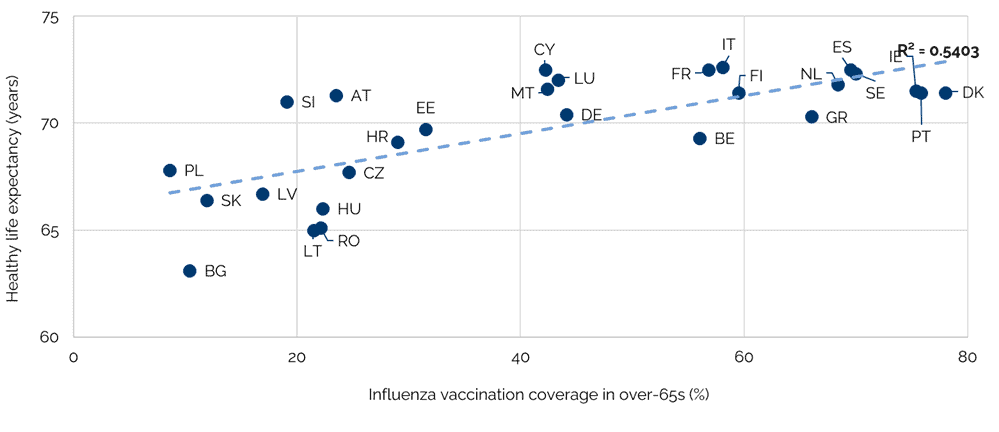
The same countries fall behind every year – and with each flu season that passes without adequate vaccination, healthy life expectancy takes a hit.
Inequity doesn’t end at borders. Within countries, ethnic minorities, migrants, and lower-income households face consistently lower vaccine uptake and worse health outcomes.
The untold burden
As respiratory illness leads to complications for older adults, health crises are created in the absence of effective immunisation strategies. Cardiovascular disease costs the EU €282 billion annually. Preventing respiratory illness is critical to reducing the risk of heart attacks and other costly complications in older adults, and the subsequent healthcare cost burdens across Europe.
We know prevention works
We already have the tools to face this challenge head on. Vaccination is one of the most cost-effective public health interventions ever developed – with studies showing that for every £1 invested in immunisation, a possible £19 is returned to the healthcare system.
Yet, across Europe vaccination strategies remain patchy, uptake targets are routinely missed, and awareness of life-course vaccination is persistently low.
Europe is living longer, and this can be a good thing. But functional longevity – the ability to live those extra years actively, independently, and in good health – depends on how seriously we take respiratory health.
This project is financially supported by Sanofi.
